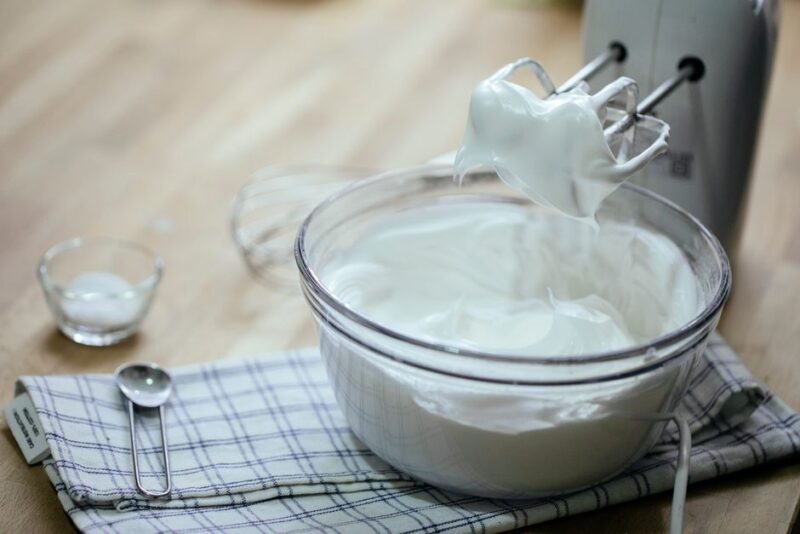
Two things decide it: fat content and temperature. Cream below roughly
30% fat will not whip however long you beat it, and cream that is not properly cold
will not either.
Check the carton first
This is the one that cannot be fixed by technique. Whipping works because fat globules
link into a network that traps air; below about 30% there simply are not enough of them.
| Fat | Whips? |
|---|---|
| 10–20% | No |
| 30–35% | Yes — the standard choice |
| 36%+ | Yes, fastest and most stable |
Then get everything cold
Warm fat is soft and will not hold a structure. Chill the cream thoroughly and put the bowl
and beaters in the freezer for fifteen minutes first. On a hot day, stand the mixing bowl in a
larger bowl of iced water.
This single step is the difference between three minutes and never.
Two other possibilities
It was frozen.
Cream that has been
frozen will not whip again — the emulsion is already broken. Fine for sauces,
never going to be a topping.
It is ultra-pasteurised. UHT cream whips more slowly and holds less well.
It works; expect more time and a softer result.
Over-whipped: what to do
The moment cream turns grainy it has begun separating into butter and buttermilk.
Caught early: stop the mixer and fold in a tablespoon or two of fresh liquid
cream by hand. That usually brings it back.
If it has gone properly yellow and split, do not fight it — keep beating deliberately,
drain the liquid, and you have butter.
Making it hold
- Stop at soft peaks if it will be folded into something; stiff peaks only for piping.
- Icing sugar stabilises better than granulated, because it contains a little starch.
- Whipped cream holds a few hours in the fridge; longer needs a stabiliser.
See also:
Can you freeze heavy cream ·
Why egg whites will not whip ·
What is smetana ·
No-Bake Madeira Cream Cheesecake