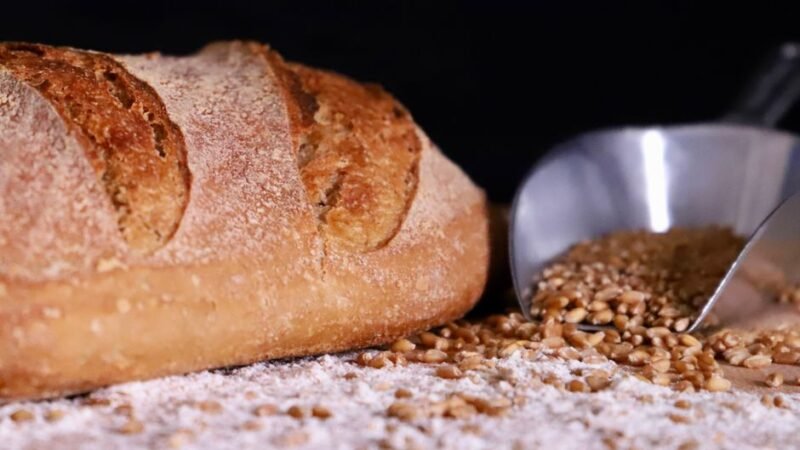
Ten minutes. That is the window in which a crust is decided — and what it
needs during those ten minutes is steam, which sounds like exactly the wrong thing.
Why a wet oven gives a dry crust
Steam keeps the surface of the loaf flexible while it expands. Once expansion stops,
the moisture is driven off and the sugars on that surface caramelise into a thin,
glassy crust.
Without steam, the surface sets within the first minute or two. The loaf cannot expand
fully, it stays pale, and the crust ends up leathery rather than crisp — soft in the
unpleasant way rather than the brioche way.
How to get steam in a domestic oven
- A covered cast-iron pot for the first 20 minutes. The loaf makes its own
steam, and this works better than anything else at home. - A tray on the oven floor, preheated, with a cup of boiling water poured
in as the bread goes in.
Then remove the cover or the tray for the last third so the crust can dry
and colour. Steam all the way through gives a pale, soft loaf — the sequence matters
as much as the steam.
The other side of the window: heat
Crust colour is caramelisation, and caramelisation needs heat. Preheat for a full 30–40
minutes, not ten — the stone or pot has to be hot, not just the air. Most domestic ovens
also run below the dial, which compounds it.
And after the oven
Cool on a wire rack in open air. A finished loaf is full of steam that has to go somewhere;
left in the tin, on a board, or worst of all in a plastic bag while warm,
that moisture reabsorbs into the crust and softens it within minutes.
Storage undoes it too
Plastic keeps the crumb soft and destroys the crust; paper or linen does the opposite.
You cannot have both. A soft crust can be revived — 5–8 minutes at 180 °C —
and the same trick works on
bread from the freezer.
When soft is the point
Enriched doughs — brioche, milk bread, buns — contain fat and milk and are supposed to have
a soft crust. Steam and high heat will not change that, and should not: those loaves are often
brushed with butter afterwards precisely to keep it tender.
More on this:
Why bread is gummy inside ·
Why dough does not rise ·
What is pampushky ·
Can you freeze bread