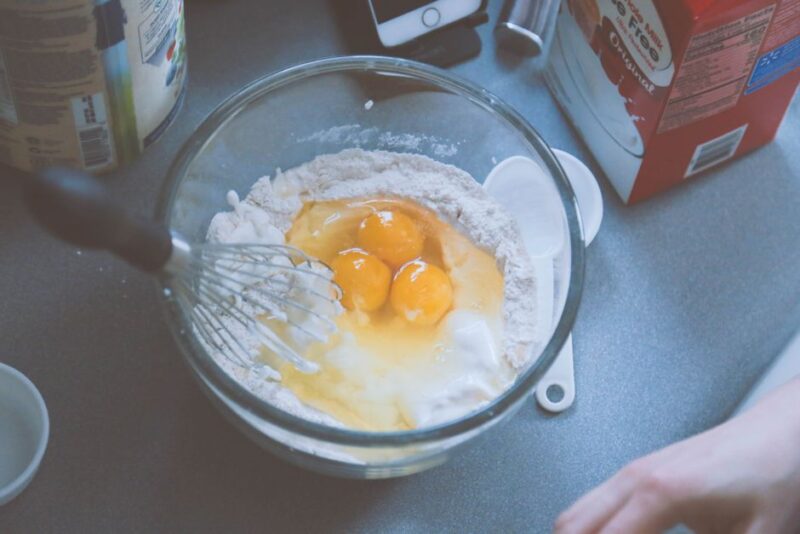
It thickens because the flour is still drinking. Starch granules and
protein absorb liquid for a good half hour after mixing, so a batter that poured like cream
at the start pours like custard by the time you get to the pan. Nothing has gone wrong —
that is the resting working.
What resting actually does
| During the rest | Effect in the pan |
|---|---|
| Flour hydrates fully | No dry lumps, even colour |
| Gluten relaxes | Pancakes stop tearing |
| Air bubbles rise out | Fewer holes, smoother surface |
| Starch swells | Batter thickens — the visible part |
Which is why skipping the rest is a bad trade: you avoid the thickening and inherit
tearing instead.
Just thin it back
Whisk in a tablespoon or two of milk or water until it flows off the
ladle in a ribbon again. This is not a compromise — it is the intended sequence. Many
old recipes are written to be deliberately slightly thick at mixing for exactly this reason.
How long to rest it
- Thin crepes: 30 minutes minimum; an hour is better.
- Thick pancakes with soda: 10–15 minutes, no more — the raising agent
starts working immediately and waiting costs you the lift. - Overnight in the fridge: excellent for crepes; expect to thin it
considerably in the morning.
When thickening is a different problem
If the batter thickens within minutes rather than over half an hour, there was too much
flour to begin with. And if it thickens and turns rubbery, it was overmixed —
that is developed gluten, and resting will not undo it.
Read next:
Why pancakes tear ·
What is nalysnyky ·
Can you bake with kefir instead of buttermilk ·
Why pancakes are not fluffy