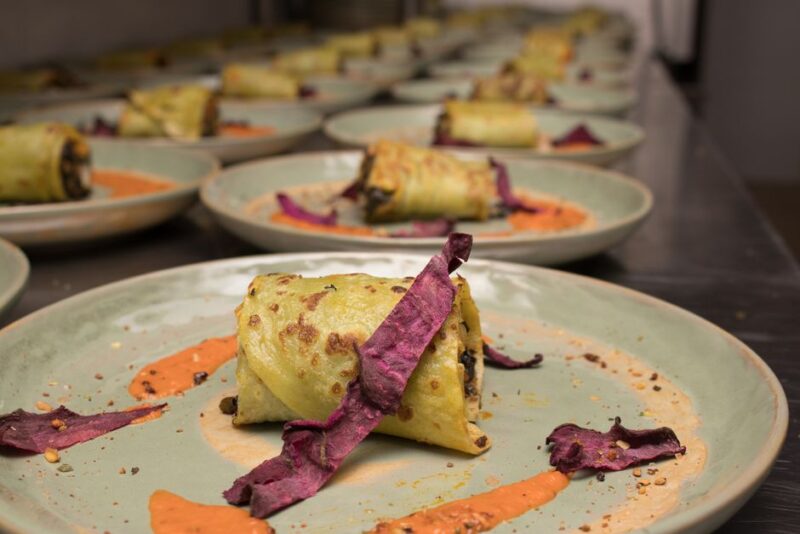
Nalysnyky are thin crepes wrapped around a filling — most often sweetened farmer’s cheese —
folded into parcels and then fried a second time in butter or baked in sour cream.
That second cooking is what separates them from a plain filled pancake, and the whole dish
is best described in order.
Step 1. Make the batter thin
Eggs, milk, flour, a little sugar and salt, and oil in the batter itself so the pan needs
less. It should be noticeably thinner than a pancake batter — closer to single cream.
Some cooks replace part of the milk with sparkling water for a lacier result.
Step 2. Let it rest thirty minutes
The step people skip. Resting hydrates the flour and relaxes the gluten,
and the difference is immediate: rested batter spreads evenly and tears far less.
Step 3. Fry on one side only
This is the part that is specific to nalysnyky. The crepes are cooked properly on one side
and only just set on the other — the filling goes on the pale side,
which stays soft enough to roll without cracking.
They get their second side later, in butter.
Step 4. Drain the cheese
Farmer’s cheese with egg yolk, sugar, vanilla and raisins. If the cheese is wet,
drain it in a sieve first — wet filling soaks through the crepe and the parcel falls apart.
Savoury versions use meat, mushrooms, liver or cabbage.
Step 5. Fold parcels, not rolls
Filling in a line across the lower third, sides folded in, then rolled up —
an envelope. Rolled tubes are pancakes; the folded parcel is the nalysnyk shape,
and it holds the filling when it goes back in the pan.
Step 6. Cook them a second time
Butter in the pan, both sides until golden. Or, for a crowd, into a dish,
covered with sour cream, 15–20 minutes at 180 °C.
Making them ahead
Assembled and unfried, they keep two days refrigerated and freeze for up to three months —
straight into the pan from frozen. Making a large batch and freezing it is standard practice
rather than a shortcut.
Also in the guide:
What is syrnyky ·
What is smetana ·
What is varenyky ·
What is tvorog