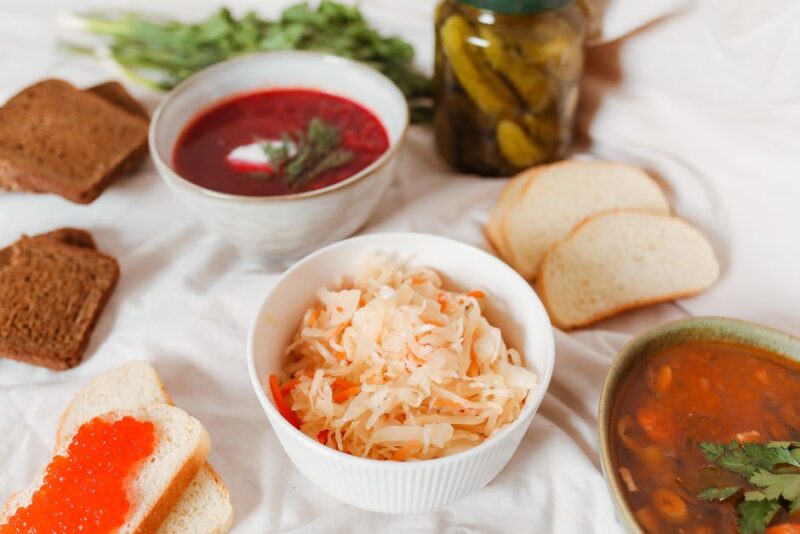
The short definition
A Ukrainian soup built on beetroot, cabbage and a fried vegetable base, usually cooked on
meat stock and served with smetana. Sour rather than sweet, deep red rather than pink.
What actually has to be in it?
Beetroot, a fried base of onion and carrot, and something acidic. Everything else —
cabbage, potato, tomato, meat — varies by region and household.
The non-negotiable part is the fried base. Vegetables softened in fat
before they meet the liquid are what separates borscht from boiled beetroot soup,
and it is the step most foreign recipes skip.
Should it have beans?
In some regions, yes. Beans are standard in western and central Ukrainian versions and
absent in others. Neither is wrong.
What they change is the character: beans make borscht substantial enough to be the whole
meal, which is the point in a Lenten version cooked without meat. Use dried beans cooked
separately and added near the end — they will never soften in an acidic soup.
Why does it have to be sour?
The acidity is structural, not decorative. It holds the colour — beetroot pigment fades in
a neutral pot — and balances the sweetness of the beetroot. Tomato, vinegar, lemon, brine from
pickled vegetables, or fermented beetroot kvas all do the job.
Is there only one borscht?
No, and this is where most confusion comes from. Green borscht is made
with sorrel and no beetroot at all, served with a boiled egg. Cold borscht is
a summer version on kefir. Lenten borscht has no meat and often beans,
mushrooms or prunes.
It is better understood as a family of soups than a single recipe.
Is it Ukrainian or Russian?
Ukrainian. In 2022 UNESCO inscribed the “culture of Ukrainian borscht cooking” on its List
of Intangible Cultural Heritage in Need of Urgent Safeguarding — note the wording: what is
protected is the practice, the occasion and the transmission, not a single fixed recipe.
Which is fitting, because there is no single fixed recipe.
Is it really better the next day?
Yes, and it is worth planning around — the flavours settle overnight. Just add the smetana
in the bowl rather than the pot, or you lose most of
the days
it would otherwise keep.
Nearby:
Why borscht loses its red color ·
What is smetana ·
What is salo ·
Chilled Melon and Cucumber Soup with Bacon