Wiener Schnitzel (Viennese Veal Schnitzel)
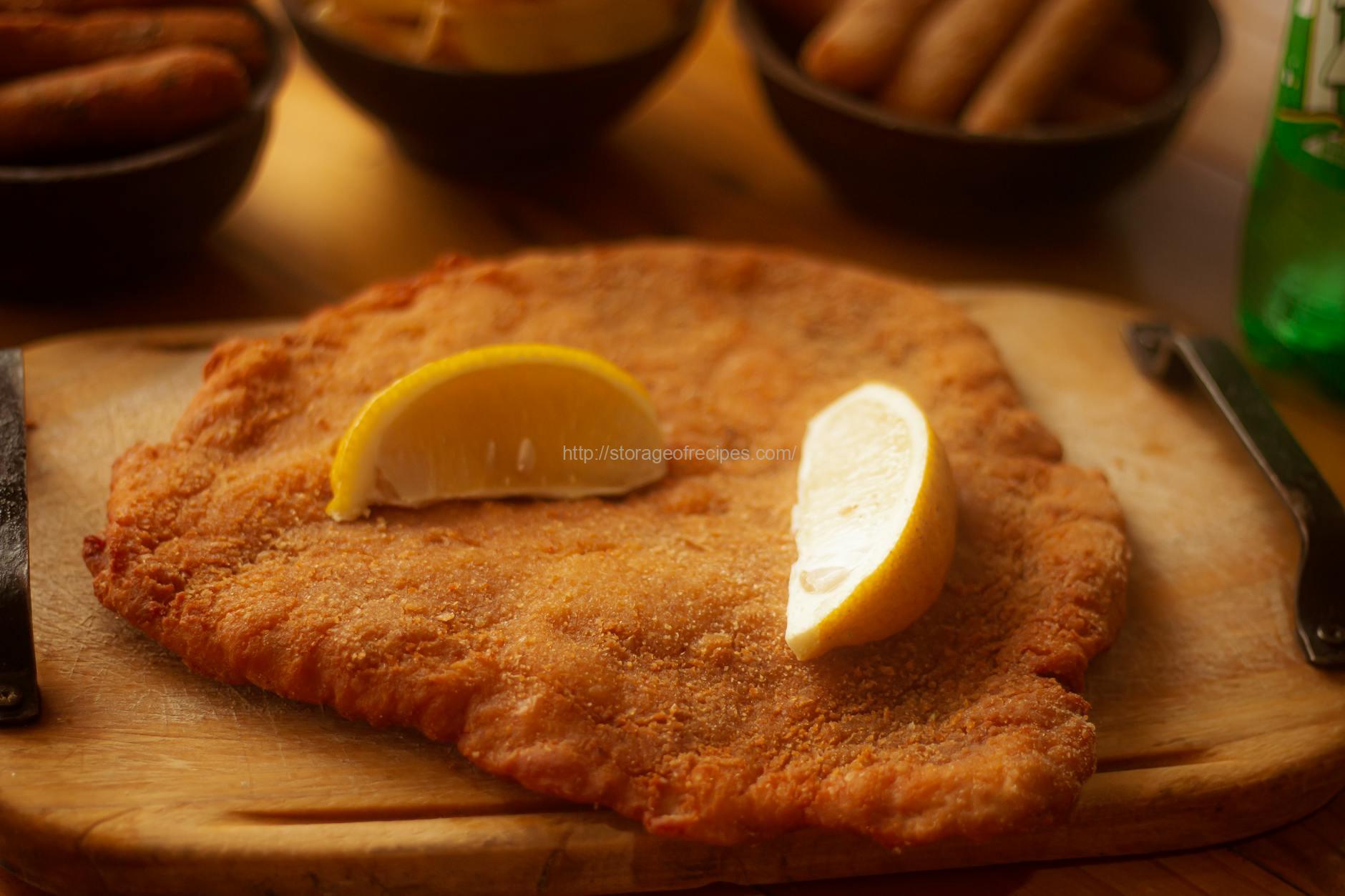

There’s something deeply satisfying about a properly made Wiener Schnitzel: a paper-thin cutlet of tender veal wrapped in a shatteringly crisp, golden crumb coating, fried in butter until it puffs up and crackles. When you cut into it, the meat is juicy and delicate, the crust audibly crunchy, and a quick squeeze of fresh lemon brightens the whole plate. This is comfort food at its most elegant, and once you learn the technique, you’ll find yourself making it again and again for family dinners and special occasions alike.
The Wiener Schnitzel (“Viennese cutlet”) is the national dish of Austria and one of the most beloved foods in all of Central Europe, including here in Ukraine where it’s a cherished restaurant and home favorite. While breaded fried cutlets have existed in many forms, the dish became firmly associated with Vienna in the 19th century, and Austrian law actually protects the name “Wiener Schnitzel” for the version made with veal. It’s traditionally served with a wedge of lemon, and in Austria you’ll often find a small spoonful of lingonberry or cranberry jam tucked along the rim of the plate, with buttery new potatoes alongside.
The secret to an authentic schnitzel lies in two things: pounding the veal thin and gentle, and frying it in plenty of fat so the cutlet almost floats. Pound each piece to just 3 to 4 millimeters, which tenderizes the meat and helps it cook in minutes. As you fry, spoon the hot butter continuously over the top, which is the classic trick that makes the coating “souffle” away from the meat in those signature wavy bubbles. Chilling the breaded cutlets for about 20 minutes before frying helps the crumb layer set so it stays put in the pan.
Tips & Substitutions
- No veal? Use thin pork loin cutlets (this becomes Schnitzel Wiener Art) or boneless chicken breast for a budget-friendly version.
- Butter burning too fast? Use clarified butter or a mix of butter and a neutral oil to raise the smoke point while keeping that rich flavor.
- Crispier crumb: Swap regular breadcrumbs for panko, or stir a spoonful of grated Parmesan into the crumbs.
- Gluten-free: Use rice flour and gluten-free breadcrumbs; the technique stays exactly the same.
- Lighter touch: Press the cutlets gently into the crumbs rather than packing them on, so the coating stays airy.
Serve your schnitzel immediately, while the crust is at its crispiest, with a lemon wedge, a dollop of cranberry or lingonberry jam, and buttery new potatoes, a cucumber salad, or a green salad dressed with vinegar. Leftovers keep in the fridge for up to two days; reheat them in a hot oven or air fryer rather than the microwave to bring back the crunch. However you serve it, this golden cutlet is sure to become a treasured part of your table. Enjoy, and as we say, smachnoho!
You might also like





Ingredients
Instructions
Take the veal and cut it crosswise against the grain into equal pieces of about 150 to 200 grams each.
Pound each piece with a meat mallet to a thickness of 3 to 4 mm so the meat becomes even and tender.
Season the pieces with pepper and salt, then dredge them thoroughly first in flour, then in beaten egg, and finally in breadcrumbs.
Let the breaded cutlets chill in the refrigerator for up to 20 minutes so the coating holds firmly.
Meanwhile, place the butter in a frying pan and melt it.
Take the cutlets out of the refrigerator, lay them in the pan, and fry, constantly spooning the butter over the top.
Fry the schnitzel for 4 to 5 minutes per side over medium heat, until a golden crust forms.
Before serving, remove excess fat by resting the schnitzel on a paper towel for a few seconds.
Transfer the schnitzel to a plate and top with a lemon slice (in Austria, a little cranberry jam is also added at the edge of the plate). It tastes best with new potatoes. Enjoy!
Reviews
There are no reviews yet.