Pancakes Made with Pickle Brine
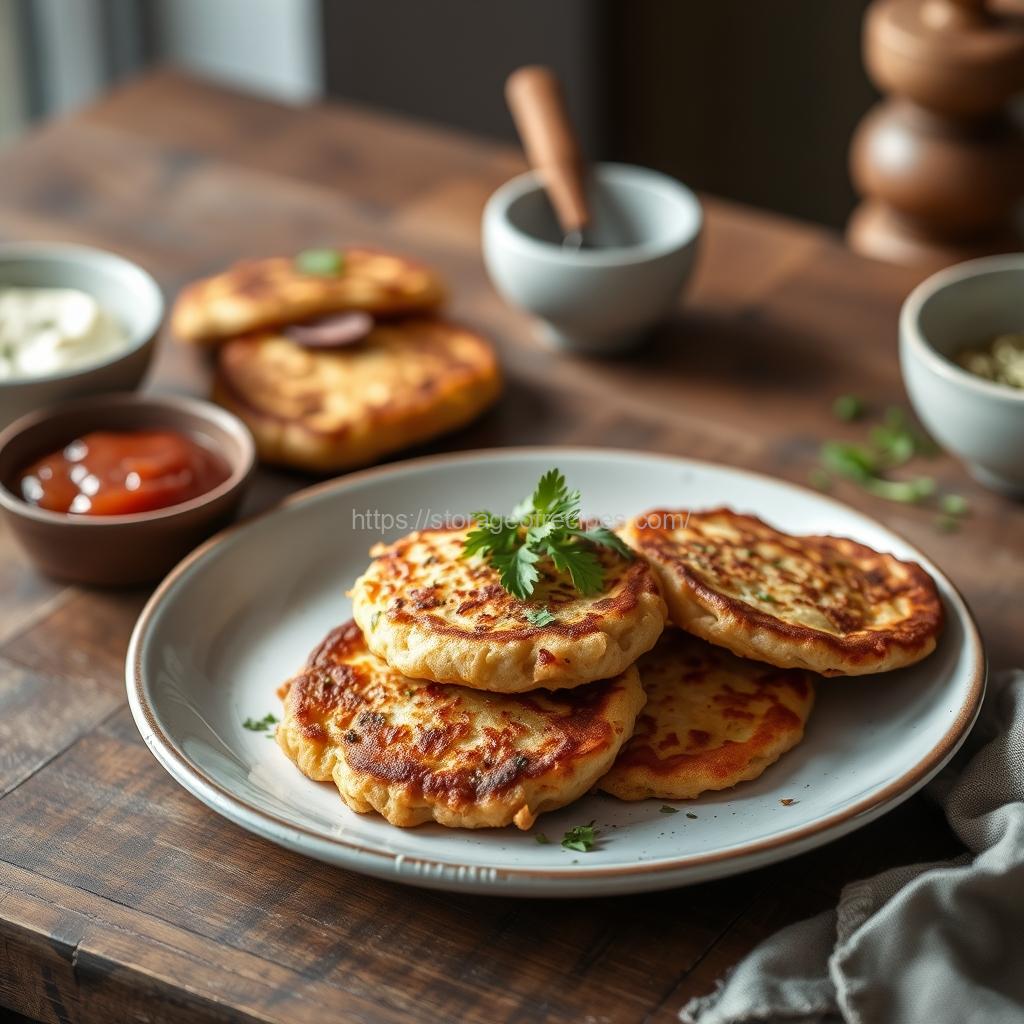

This is the kind of recipe that turns up at the end of canning season, when there’s a jar of leftover brine in the fridge and nobody wants to pour it down the sink. In Eastern European kitchens that liquid — rassol, the cloudy salty-sour brine from pickled cucumbers, tomatoes or sauerkraut — counts as an ingredient in its own right. Its acidity sets off baking soda the way buttermilk would, so 200 ml (a scant cup) lifts the batter with no dairy in the bowl at all, and the pancakes come out savory rather than sweet.
The semolina isn’t there to thicken anything. Soaked in the brine for a quarter of an hour, the grains swell and soften, and they vanish into a tender crumb instead of grinding between your teeth.
- Stir the soda in last, as the pan is heating. Let the batter rest and the bubbles escape into the air rather than into the pancakes.
- Use one kind of brine only — cucumber and cabbage brine mixed together taste oddly grassy.
- Keep the lid off: trapped steam softens the crust you just built.
A spoonful of grated carrot or pumpkin adds color and a faint sweetness the honey picks up. Blot the finished pancakes on a towel before buttering them so they don’t sit in their own fat.
Part of Ukrainian cuisine — 448 more recipes in the section.
You might also like









Ingredients
Instructions
Stir together the brine, semolina, honey, and grated carrot (or pumpkin) and let it stand for about 15 minutes so the semolina swells.
Add flour to the consistency of thick sour cream.
Stir in the baking soda (about 1/4 tsp) - the soda must be added right before frying.
Fry on a pan greased with oil using half an onion or a piece of pork lard.
Once you flip the pancakes, lower the heat so they cook through well; do not cover with a lid.
Transfer the finished pancakes to a towel to draw off excess moisture, and you can brush them with butter right away.
Reviews
There are no reviews yet.