Moscow-Style Skillet Solyanka
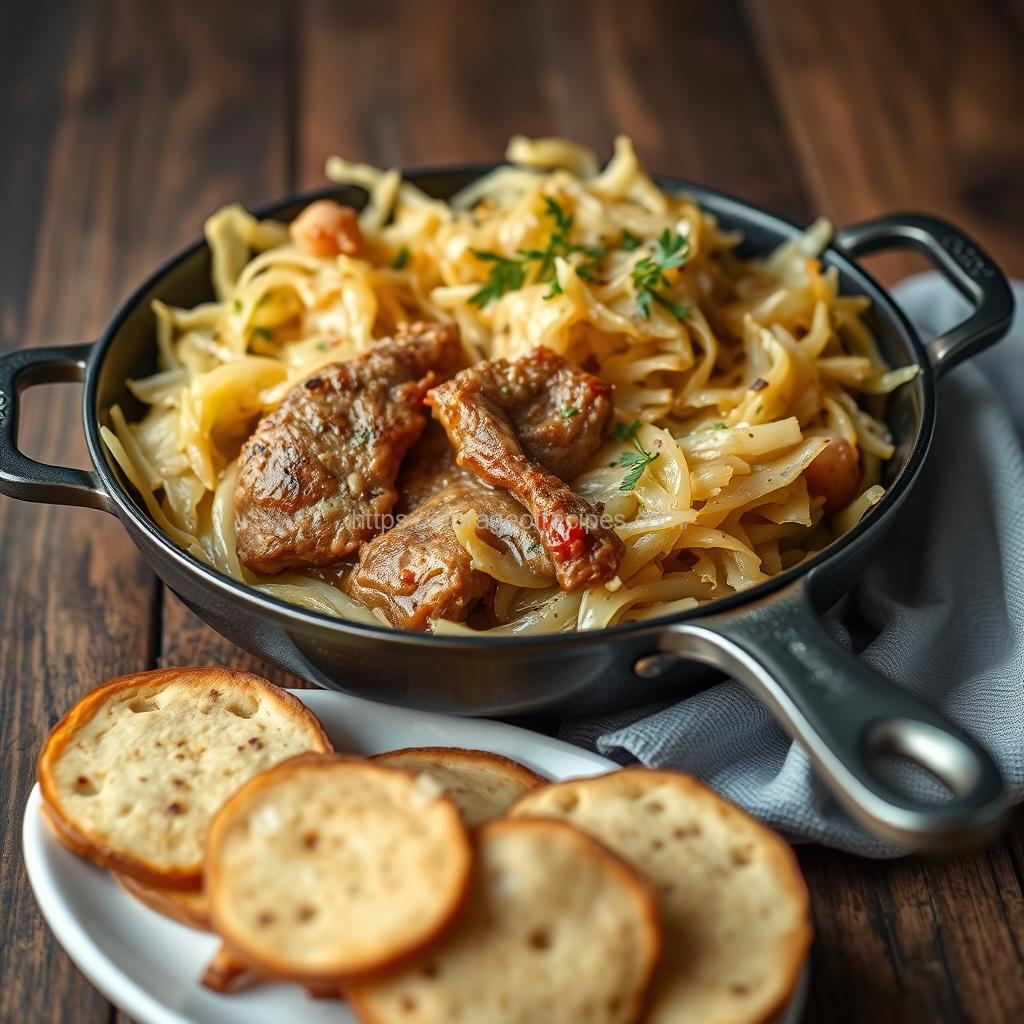

Solyanka in most Western cookbooks means a sour, briny soup, but the version Moscow taverns were known for in the 1800s is this one: no broth at all, just sauerkraut, fried meat, pickles and marinated mushrooms layered in a heavy skillet, browned in the oven and carried to the table in the same pan.
Rinse the sauerkraut and wring it out hard. Six to eight hundred grams (about a pound and a half) holds a lot of brine, and that liquid both over-sours the dish and stops the top from browning. The tablespoon of flour dusted over the braised cabbage thickens the juices that seep out in the oven, so a serving lifts out in layers instead of sliding apart.
Brown the meat on its own, in a separate pan, and take it further than feels necessary. Acid stalls Maillard browning, so meat braised together with the cabbage simply goes grey and tastes boiled.
No sauerkraut? Shred fresh white cabbage, bring it to a boil in water, drain, then braise it in oil with 2-3 shredded tart apples — Bramley or Granny Smith — which supply the acidity you’d otherwise be missing. Serve it straight from the skillet with mustard, or with smetana, the thick full-fat sour cream; ordinary sour cream is fine.
Part of Eastern European cuisine — 65 more recipes in the section.
You might also like









Ingredients
Instructions
Fry the finely chopped meat separately. Finely shred the onion and fry it.
Rinse the sauerkraut lightly, wring it out, add the onion, stir, cover, and braise until done, stirring often so it doesn't scorch.
Dust the cabbage with the flour and stir again.
Transfer the cabbage into a deep skillet or roasting pan, alternating in layers: a layer of cabbage, a layer of fried meat, then another layer of cabbage.
On top, arrange the sliced pickles and mushrooms, drizzle with sauce, spread out the rest of the fried meat, and sprinkle with breadcrumbs.
Place in the oven so the dish browns. Serve in the same skillet.
Reviews
There are no reviews yet.