Lenten Shchi with Sauerkraut and Mushrooms
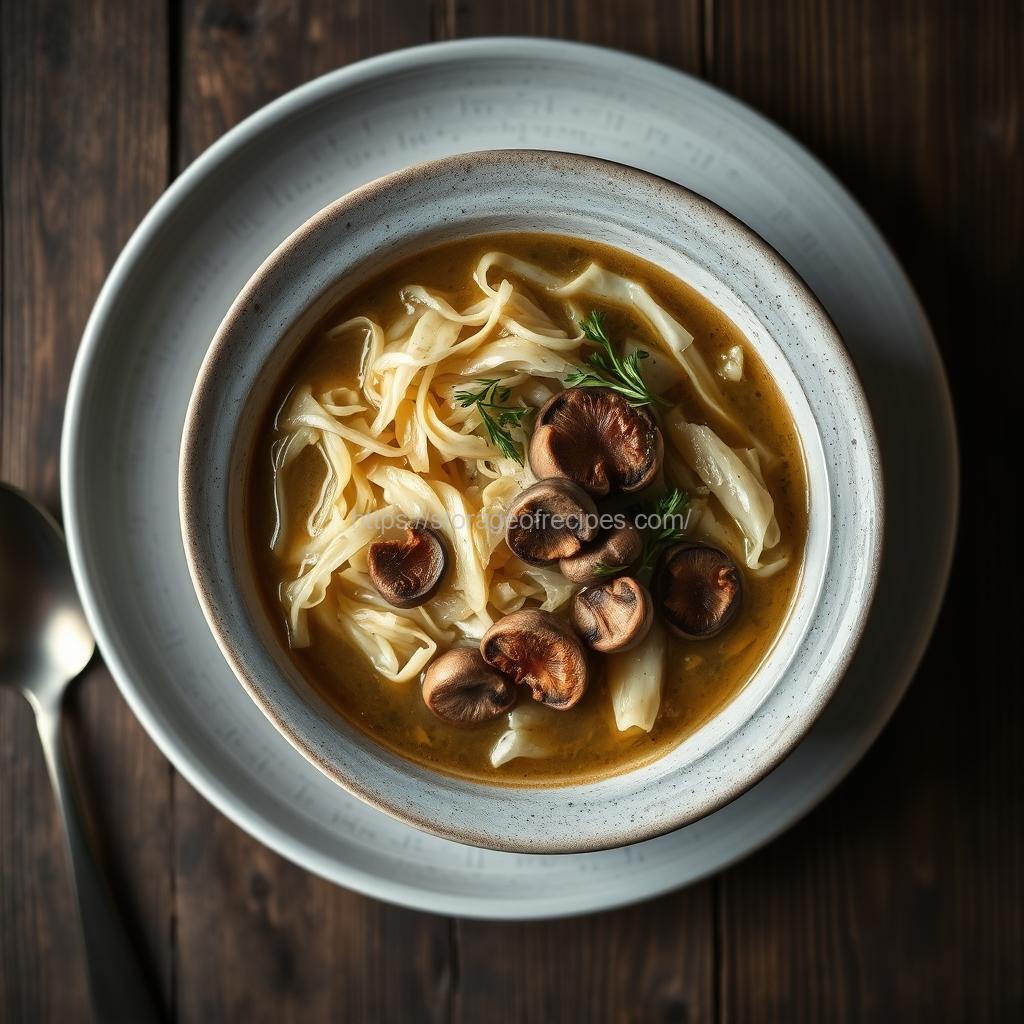

Shchi — the sauerkraut soup at the center of Russian and Ukrainian home cooking — was built this way for Orthodox Lent, when neither meat nor dairy was allowed, which is why the body comes entirely from dried mushrooms: a liter (about 4 cups) of their broth stands in for stock and brings a woodland depth with it.
The old move that matters most
The cabbage doesn’t simply go into the pot. It is first doused with 500 ml (2 cups) of boiling water and held in a clay pot in the oven for half an hour, then ground with chopped onion and oil under a wooden spoon until the fat disappears into it. The fibers soften, the aggressive sourness backs off, and the soup takes on a velvety thickness you cannot reach by simmering alone. Enamel and wood aren’t fussiness — acidic cabbage reacts with bare metal.
That single tablespoon of buckwheat is a thickener, not a typo. Turnip or rutabaga supplies an earthy sweetness potato can’t. Use refrigerated raw sauerkraut rather than the shelf-stable canned kind; if it tastes too sharp, rinse it or add a pinch of sugar to the broth. Dried porcini give the deepest flavor, and their soaking water belongs in the pot, not the sink. Like most cabbage soups, this one is better on day two — serve with rye bread.
Part of Eastern European cuisine — 68 more recipes in the section.
You might also like












Ingredients
Instructions
Pour 0.5 l of boiling water over the sauerkraut, transfer it to a clay pot, and put it in the oven for 30 minutes.
Drain the liquid into a separate enamel container, then salt the cabbage, mix it with finely chopped onion, drizzle with oil, and grind it in an enamel bowl with a wooden spoon until the oil is fully absorbed.
Combine the cabbage with the liquid again and continue cooking on the stove.
Separately prepare 1 l of mushroom broth (boil the mushrooms in advance) and combine it with the cabbage.
Add the buckwheat groats, root vegetables, spices, and herbs and cook until done.
Reviews
There are no reviews yet.