Homemade Apple Marshmallow (Zefir)
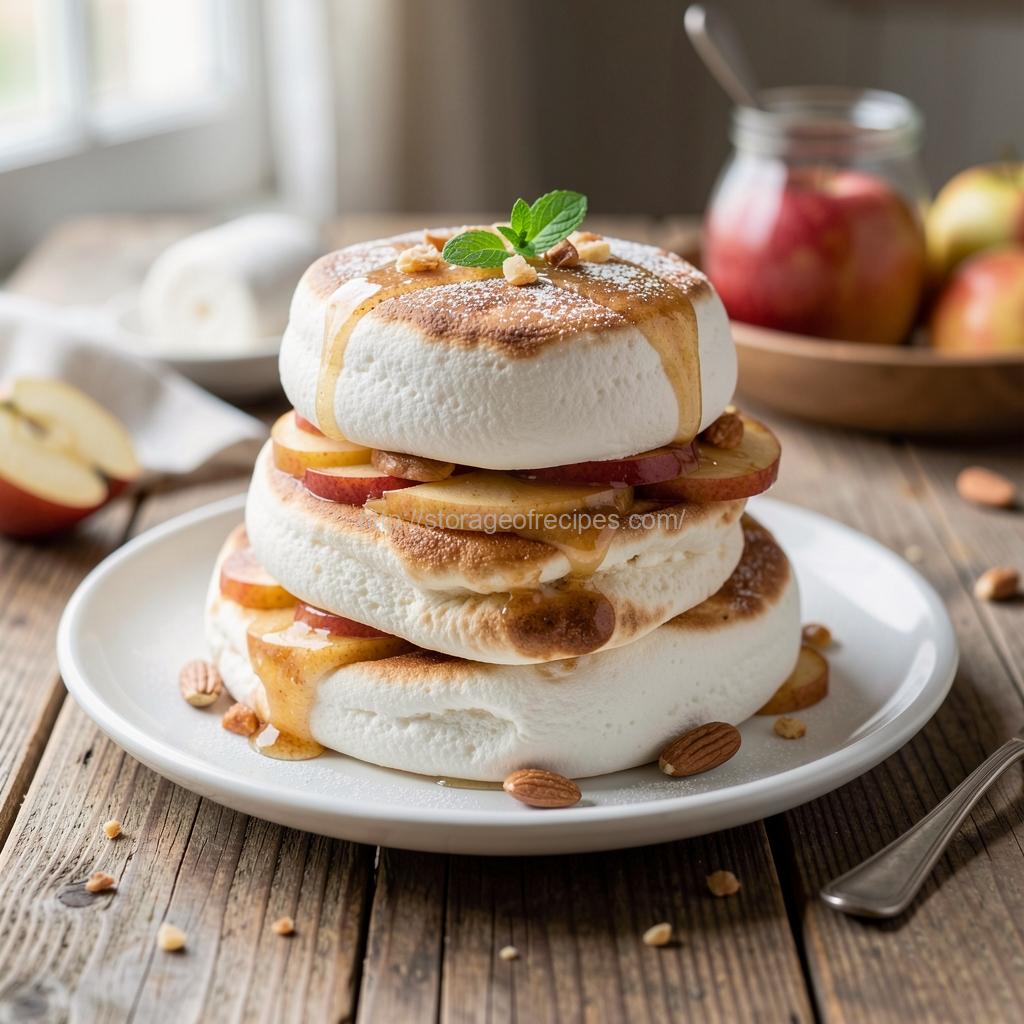
Start with baked, not raw, apples: they give the velvety, thick puree that lets the mixture stabilize properly once you whip it with egg whites. This homemade zefir (a soft Slavic fruit-and-meringue confection, closer to a dense marshmallow) sets on the apples’ own pectin plus ordinary gelatin, with no dyes or flavorings, so you’d never mistake it for a store version.
The make-or-break step is cooking the syrup. Use the jam test: a cold drop on a saucer should hold its shape and not run. Undercooked, it gives a runny marshmallow that never firms; overcooked, it turns stringy and caramel-like. Pour the hot mixture into the whites slowly, in a thin stream, or they scramble into lumps instead of a light foam.
Good to know
Instead of apples, other firm high-pectin fruit works: quince, wild pears, or plums. Wet the molds or baking sheet with water rather than greasing with oil; the moisture keeps the mixture from sticking without spoiling the delicate texture. A pinch of citric acid adds a pleasant tang and helps stabilize the whites. Store the zefir covered, in a cool, dry place, so the surface doesn’t dry out.
Part of Eastern European cuisine — 65 more recipes in the section.
You might also like





Ingredients
Instructions
Bake the apples in the oven until soft, then press them through a sieve to get a smooth puree with no skin or seeds.
Cover the gelatin with cold water and let it swell for 3 to 4 hours.
Bring the swollen gelatin to a boil, add the sugar, and cook into a syrup. Test it as you would for jam: a drop on a cold saucer should hold its shape.
Stir the apple puree into the syrup and bring the mixture back to a boil.
Whip the egg whites to stiff peaks. Whisking constantly, pour the hot mixture into the whites in a thin stream. Add a little citric acid if you like.
While the mixture is still warm, spread it into water-moistened molds or onto a moistened baking sheet. Once the zefir sets, cut the slab into individual pieces.
Reviews
There are no reviews yet.