Cornish Hens with Pineapple Chutney
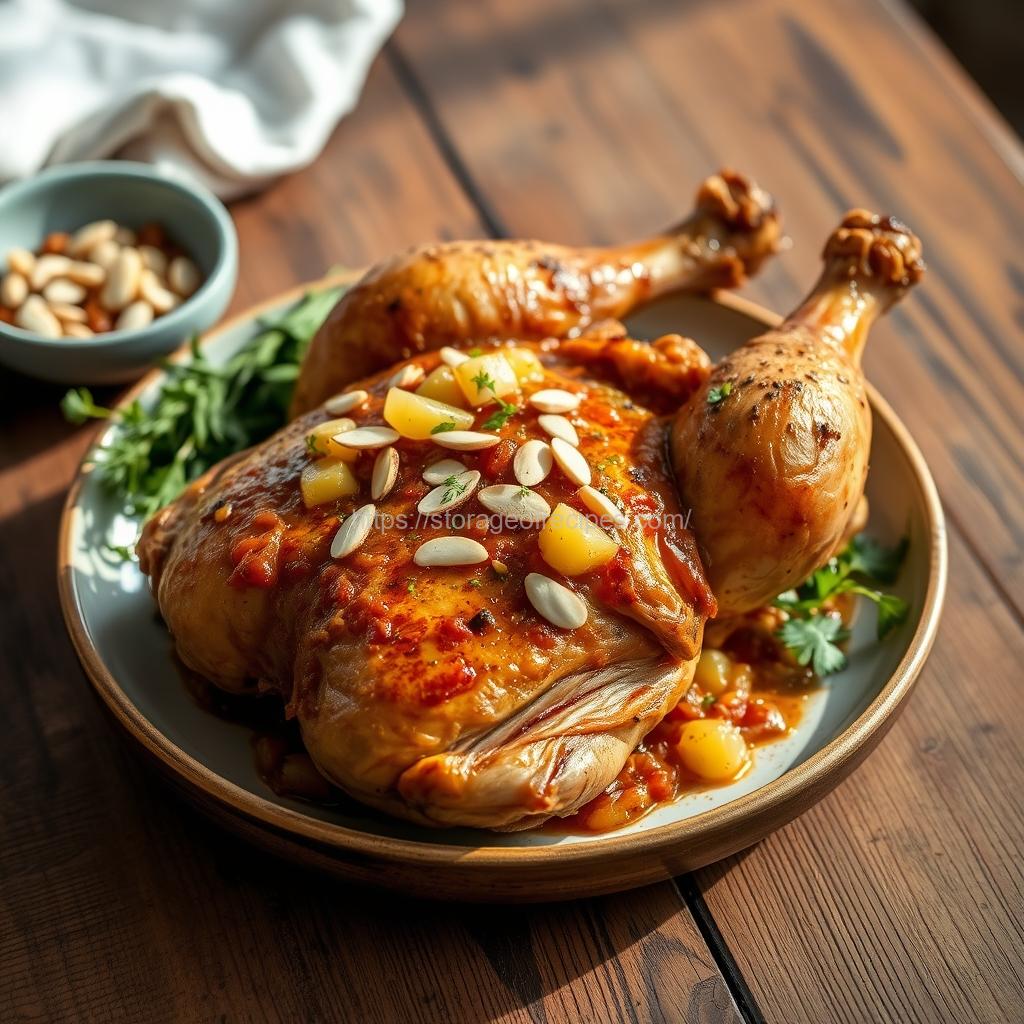

Make the chutney a day or two ahead. Straight off the stove the honey and wine vinegar still read as separate things, sharp and sweet by turns; a night in the fridge lets the acid settle so the pineapple, the red onion and the pop of mustard seed come across as one condiment rather than a list.
Chutney reached Western tables from India by way of the colonial kitchen: fruit or vegetables cooked down with a sweetener (acacia honey here), vinegar and spice. It settled in beside roast poultry, and that pairing is exactly what happens on this plate — 45 minutes of slow simmering takes the pineapple to a jammy thickness, while 40 minutes at 410°F (210°C) gives the hens crisp skin that wants something acidic next to it.
Getting the chutney right
- Do not cover the pan tightly: a good half of that cup of vinegar has to evaporate, or you end up with a pickle rather than a relish.
- Any pale honey stands in for acacia — clover or orange blossom — as does about ¾ cup of brown sugar; cider vinegar replaces the wine vinegar without complaint.
- Chicken thighs or breasts can take the place of whole hens, but shorten the roasting time or the meat dries out.
You might also like







Ingredients
Instructions
Pineapple chutney
Peel the pineapple, cut it into rounds, and quarter them. Dice the bell pepper. Peel the red onions and cut them into quarters.Pour the honey and vinegar into a pot, bring to a boil, then add the mustard seeds, pineapple, onion, and bell pepper.
Simmer over low heat for 45 minutes, stirring occasionally.
Let cool, transfer to a glass jar, and refrigerate.
Cornish hens
Heat the oven to 410°F (210°C). Season the hens with salt and pepper inside, then brown them in a nonstick sauté pan in olive oil.Place them in the oven and roast for 40 minutes.
Toast the almonds. Warm the pineapple chutney slightly and serve it with the hens.
Reviews
There are no reviews yet.