Cabbage Fermented with Apples and Berries
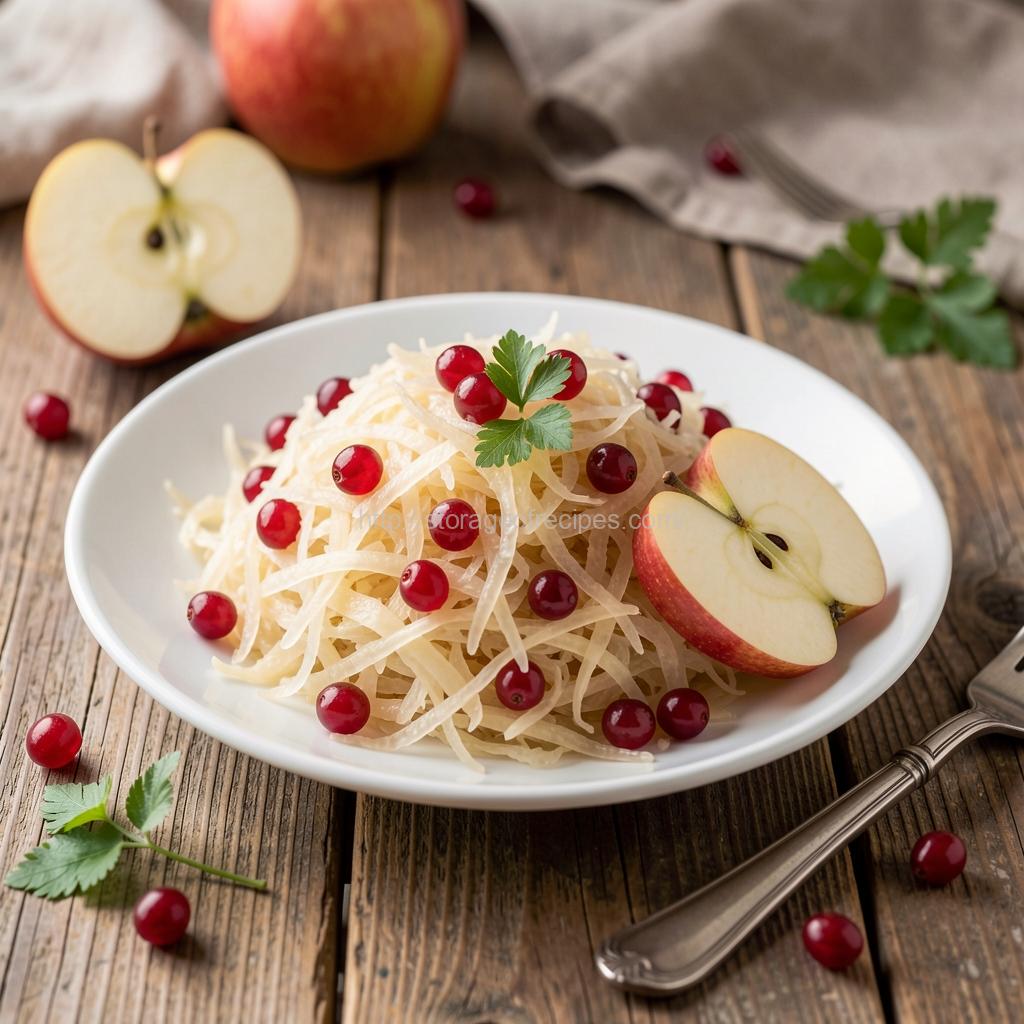
The apples and berries here do more than flavor. Tart Antonovka apples (any firm, sour cooking apple like a Granny Smith will do) give the cabbage natural acidity and aroma, while cranberries or lingonberries carry benzoic acid, a natural preservative that makes the ferment more reliable and longer-keeping. Their sweet-tart accents and light astringency make this far more interesting than plain sauerkraut.
Shredded cabbage is mixed with carrots and fermented in layers, interleaved with sliced apples, berries, and small whole or halved cabbage heads. Fermenting in a barrel or bucket under a wooden disk and a weight is the canonical Slavic technique, one of the oldest ways of putting cabbage up for winter.
Small Tricks
- Always line the bottom with large cabbage leaves; they protect the lowest layer and help hold the shape.
- Once the cabbage releases its juice, skim the foam and drive a few deep holes down through it with a wooden stick to let the fermentation gases escape and remove bitterness.
- Keep it warm the first week for active fermentation, then move it to the cold, where it finishes maturing and stops souring.
Cover with cheesecloth or white cotton cloth and press down with a weight. Serve dressed with oil and raw onion.
Part of Ukrainian cuisine — 447 more recipes in the section.
You might also like










Ingredients
Instructions
Trim the heads, cut in half or into 4 pieces, remove the core, and shred.
On the bottom of a barrel (or bucket) place a few large cabbage leaves and a layer of shredded cabbage mixed with finely chopped (or grated) carrots, and sprinkle with a little salt.
Layer in the seeded, sliced apples, cranberries (lingonberries), and small cabbage heads (whole or halved), and salt them.
Press down the next layer of shredded cabbage with carrots. Once the container is full, top it with cabbage leaves, cover with cheesecloth or white cotton cloth, and press down with a wooden disk and a weight.
The next day, when the cabbage releases its juice, skim the foam off the surface and make a few deep punctures in the cabbage.
Keep it at room temperature for the first few days, and after a week move it to a cold place.
Reviews
There are no reviews yet.