Borscht with Smoked Brisket
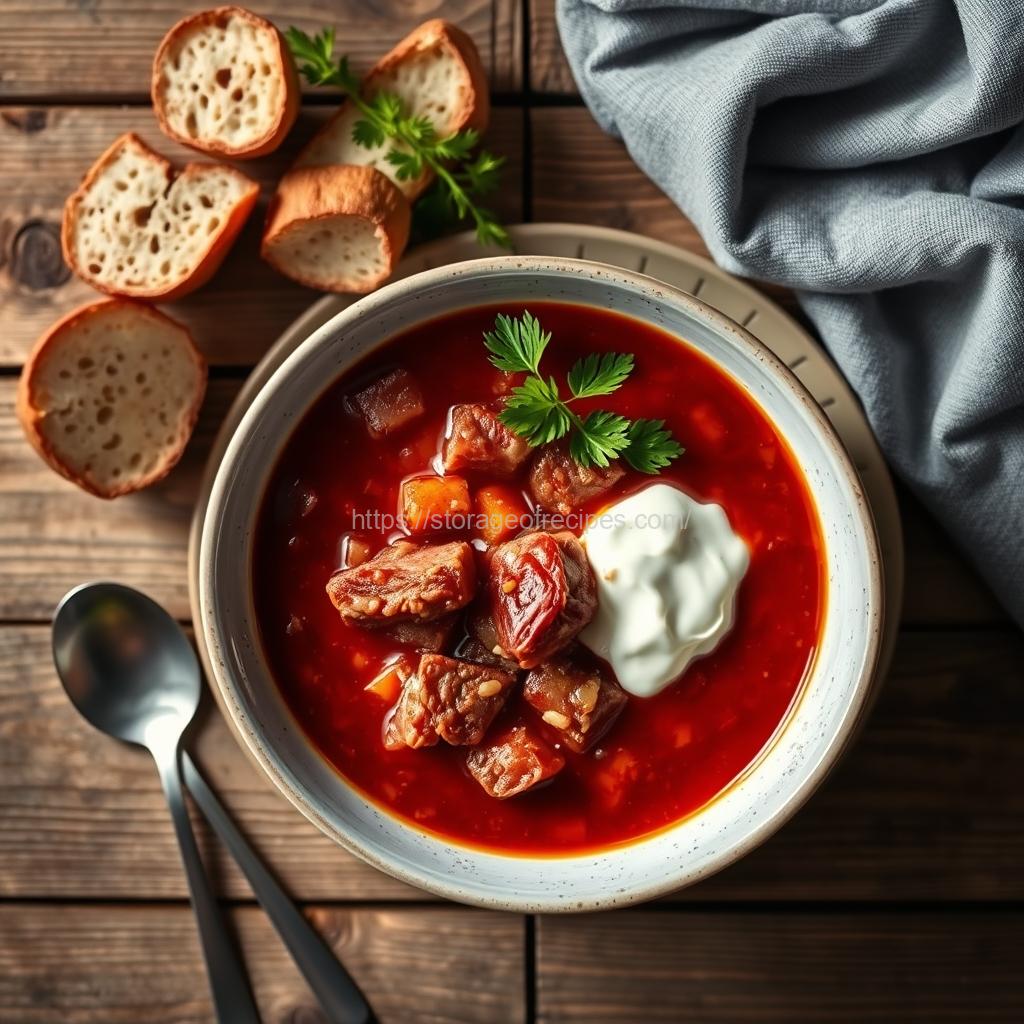
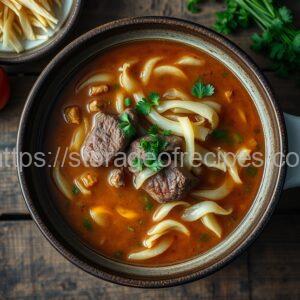
The commonest borscht mistake is tipping the beets into the pot with the cabbage. Here they are braised on their own with fat, vinegar and tomato paste: the acid fixes the betanin pigment, so the soup stays ruby instead of fading to brownish pink. That braise goes in at the end, once the cabbage is nearly tender.
300 g of smoked brisket — about 10 oz — dropped straight into simmering stock builds a smoky depth that fresh meat can’t. Parsley root and celeriac are the quiet aromatic backbone of a winter borscht; you notice them mainly when they are missing.
The details that decide it
Crushed garlic goes in ten minutes before the end, since long boiling blows off its volatile heat. Sauerkraut makes a sharper, more assertive soup, while fresh cabbage needs more vinegar to compensate. Add the sugar last and taste as you go — it isn’t there for sweetness, only to balance the acid. Smoked pork ribs or a chunk of smoked fatback stand in for the brisket. Serve with rye bread and a spoonful of smetana (full-fat sour cream); like every borscht, it is better on day two and keeps three days chilled.
Part of Ukrainian cuisine — 490 more recipes in the section.
You might also like







Ingredients
Instructions
Cut the brisket into small pieces and add it to the simmering stock.
Peel the beets, cut them into thin strips, and braise with fat, vinegar, and tomato.
Cut the onion, carrot, parsley root, and celeriac into thin strips and saute them in butter.
Shred the cabbage and cook it in the stock for 15 minutes, then add the braised vegetables and cook until done.
Ten minutes before the end of cooking, season the borscht with crushed garlic and salt.
Add bay leaf, pepper, and sugar to taste.
Serve with sour cream and fresh herbs.
Reviews
There are no reviews yet.