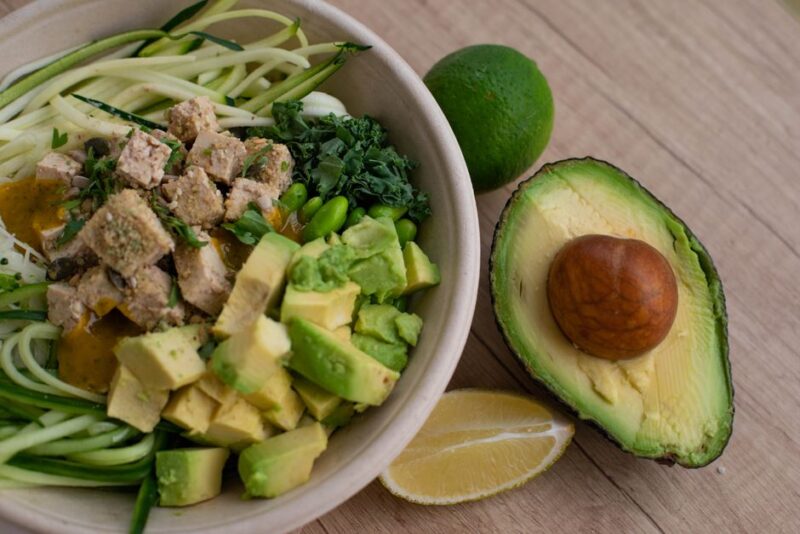
Zucchini freezes for up to ten months, and the whole method is about water.
It is over ninety percent water — which is the reason it fails when frozen carelessly
and the reason it works so well when you take that water out first.
The most useful format is grated, and it needs no blanching at all. Grate it coarsely,
toss it with salt, leave it fifteen minutes and then squeeze it hard.
The amount of liquid that comes out is startling, and it is exactly what would otherwise
turn a batch of fritters into slush. Portion the squeezed gratings into bags of 300–400 g —
one batch of fritters each — press them flat and freeze. Squeeze again after thawing;
there will be more.
Slices and cubes are a different case: those do need blanching, three minutes,
then iced water and thorough drying before freezing in a single layer.
Without it they collapse into pulp. Young zucchini can keep their skin;
on a mature one, peel it and scoop out the seeds, because both go tough
and the freezer makes them tougher.
Three things not to do. Do not freeze it whole — hours to thaw and waterlogged at the end.
Do not plan on salad, because there is no crunch after freezing and everything you put in
is destined for a hot dish. And do not thaw before cooking: grated or sliced,
it goes straight into the pan or the oven.
Ten months for blanched pieces, six to eight for grated. An August batch reaches the next
season comfortably, which is the point — courgettes all ripen at once and do not wait.
Related:
Can you freeze eggplant ·
Can you freeze bell peppers ·
Can you freeze broccoli and cauliflower ·
What is kabachkova ikra