Two vegetables that arrive in the same quantities at the same time of year,
and two opposite answers. Worth putting side by side, because the reasoning
transfers to anything else you are wondering about.
Tomatoes and cucumbers
| Tomatoes | Cucumbers | |
|---|---|---|
| Water content | ~94% | ~95% |
| Freezes? | Yes, up to 10 months | No |
| Why | Ends up cooked and broken down anyway | Wanted crisp; crispness is gone |
| Best format | Whole, or puréed | — |
| What to do instead | — | Pickle, brine, salt lightly |
The water content is nearly identical, which is the point: it is not the vegetable
that decides, it is what you intend to do with it. A tomato is destined for a sauce;
a cucumber is destined to be crunched.
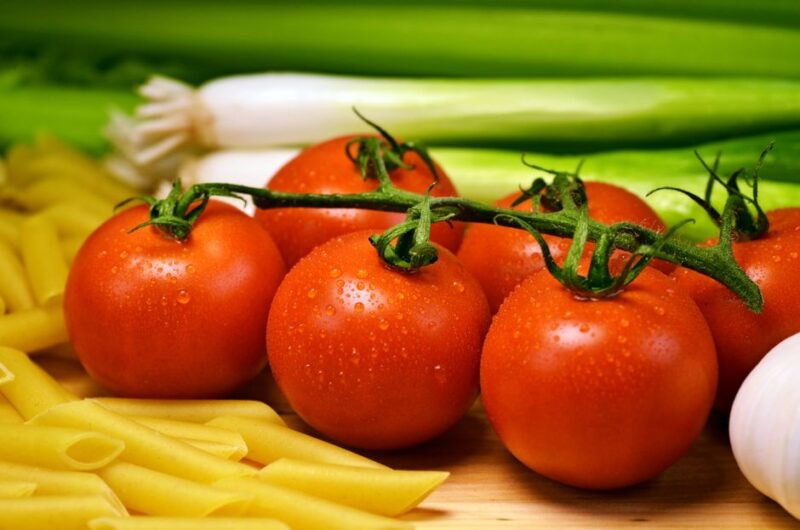
Tomatoes: whole is easiest
Wash, dry, cut out the core, bag them. That is the entire method.
And you get something for free: the skin of a frozen tomato slips off by
itself. Hold it under warm water for ten seconds and the skin peels away —
considerably easier than scoring and blanching fresh ones.
Tomatoes: purée is most useful
Blitz them, skins and all, sieve if you like, and freeze in ice cube trays or flat bags of
200–300 ml. In winter that is a ready base for soup or a braise with no tin to open.
What not to do with tomatoes
Do not freeze them for salad — a thawed tomato is pulp, not a slice. Do not thaw before
cooking; whole ones go into the pot frozen. And do not freeze overripe ones:
freezing preserves the state it finds.
Cucumbers: what to do instead
Lightly salted cucumbers within days, or proper pickling for the winter.
That is what the vegetable is built for, and it is a better use of a glut
than a freezer drawer of limp skins.
Worth reading next:
Can you freeze bell peppers ·
Can you freeze zucchini ·
Can you freeze eggplant ·
What is borscht