Yes, and of all the vegetables in this section peas take it best. Twelve
months, with a result that is genuinely hard to tell from fresh in a cooked dish — which is
exactly why commercially frozen peas are as good as they are.
The reason is size and density. A pea is small, firm and holds relatively little free
water, so there is little for ice crystals to rupture. Set that against a courgette or a
cucumber at over ninety percent water and the difference explains itself.
The method is ninety seconds of boiling water. Blanching stops the enzymes that would
otherwise turn a sweet pea starchy and dull green within a month or two. Straight into iced
water afterwards, dry them, spread them on a tray for a couple of hours, then bag. That tray
step exists purely so that you are scooping peas out of a bag in January rather than chipping
at a green brick.
Very young peas can go in raw if you plan to eat them within two or three months.
Beyond that, unblanched peas toughen regardless.
Cook them from frozen and cook them briefly — two or three minutes is plenty, and they go
straight into the pot. Thawing them first only gives them time to soften before they reach
the heat, which is how frozen peas get their undeserved reputation for being mushy.
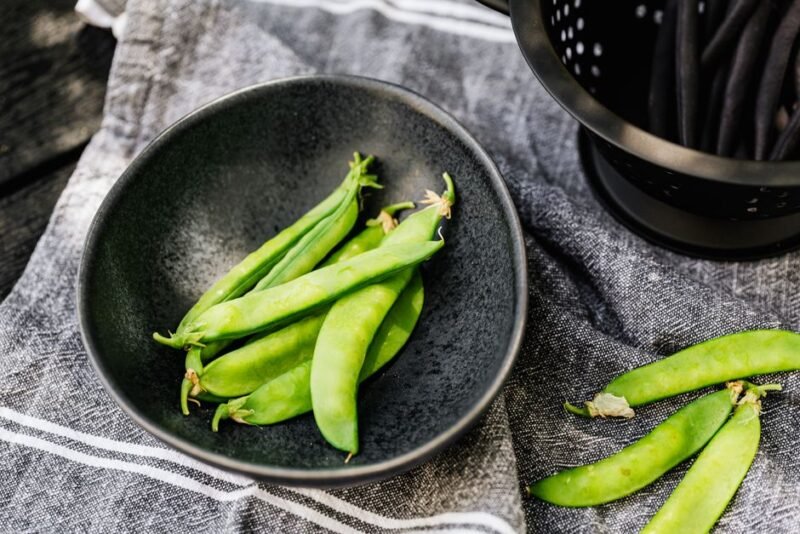
Mangetout and sugar snap are a different vegetable and want a different treatment: three
minutes of blanching, and freeze them whole in the pod.
Related:
Can you freeze corn ·
Can you freeze broccoli and cauliflower ·
Can you freeze carrots ·
How long do cut vegetables last in the fridge