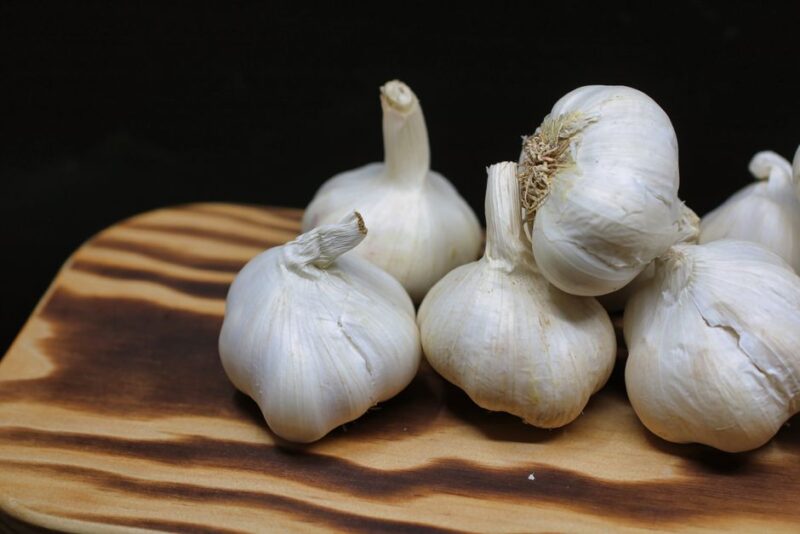
Garlic freezes well, and the peeling alone is a good enough reason: a frozen clove
slips out of its skin with a squeeze. Four formats, best first.
1. Whole unpeeled cloves
Break up the head, bag the cloves, done. No preparation at all, and
up to 12 months.
Take out what you need, leave it thirty seconds, and the skin comes away.
The flavour survives better than in any other format because nothing is cut —
garlic’s harshness develops when cells are broken, and here they are not.
2. Minced, portioned into a tray
Most convenient in daily cooking. Chop or blitz, press into an ice cube tray with a little
water or oil, freeze, transfer to a bag. One cube is roughly a clove or two,
and it goes straight into the pan.
Up to 6 months. Ranked second only because the flavour is sharper and a little
more aggressive than fresh.
3. Roasted
Whole head, top cut off, oiled, 200 °C for 40 minutes, then squeeze the soft cloves out.
Sweet and mild, and freezing costs it nothing since it is already cooked.
Up to 6 months, and useful for spreads, purée and dressings.
4. In a jar of oil — do not
Raw garlic in oil at room temperature is a recognised botulism risk. If you make it,
it must go straight into the freezer and stay there; the fridge is not enough.
Frozen cube portions with a spoonful of oil are the safe version of the same idea,
which is why they rank second and this does not rank at all.
When to skip the freezer
Whole heads keep 3–6 months in a dry, ventilated, dark place at room temperature —
not the fridge, where cold and damp make them sprout and go soft.
Freeze when a head has already been broken into, or when you have more than you can use.
The green shoot
Harmless, but bitter. Halve the clove and lift it out before chopping.
Related:
Can you freeze onions ·
Can you freeze fresh herbs ·
What is pampushky ·
Can you freeze bell peppers