Herbs divide into two groups that behave in completely different ways in the freezer,
and most disappointing results come from treating them the same.
Woody herbs: rosemary, thyme, sage, oregano
Low moisture, tough leaves, aromatic oils that sit in the leaf rather than in water.
They freeze about as simply as anything does.
Wash, dry completely, freeze whole on the stem in a bag.
Up to 12 months, and the leaves strip off frozen stems easily.
These are also the herbs that dry well, so you have a choice.
Soft herbs: dill, parsley, coriander, basil, chives
High water content and delicate leaves. Frozen loose they turn to dark slush,
which is where the “herbs cannot be frozen” idea comes from.
The answer is fat. Chop them, pack into an ice cube tray, top with olive oil or melted
butter, freeze, and bag the cubes. The oil keeps air off the cut surfaces —
colour and aroma survive far better, and the cube goes into a hot pan as it is.
Up to 6 months.
Water instead of oil works for soups, though less well.
Basil is its own case
It blackens faster than any other herb. Freeze it as pesto, or at minimum blitzed with oil —
never as loose leaves.
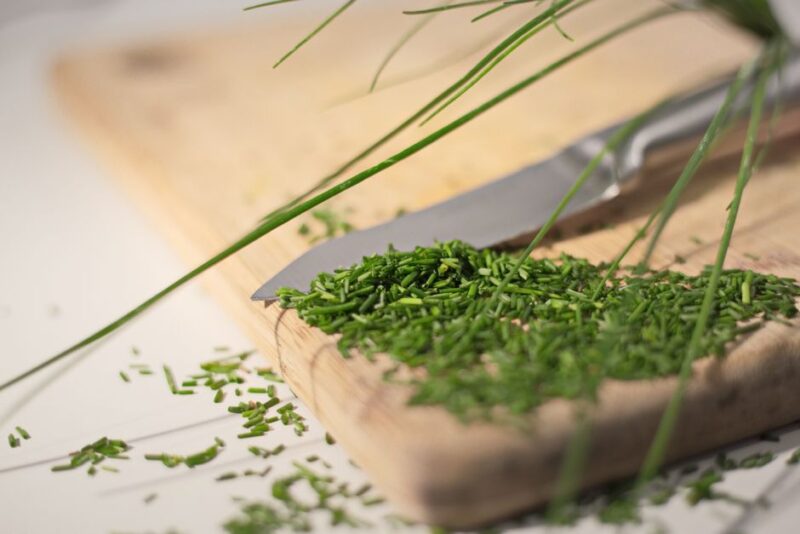
Chives and green onion
The exception among the soft herbs: sliced and frozen dry in a bag they hold up
surprisingly well, and stay loose enough to shake out. Up to 6 months.
What none of them survive
Thawing. Every one of these goes into the pot frozen. Left on the counter they collapse
into a wet mass within minutes.
And none of them come back crisp, so frozen herbs are for cooking.
For a garnish you need fresh — which keeps a week or so standing in a glass of water
in the fridge, covered loosely with a bag.
Freeze or dry?
| Herb | Better method |
|---|---|
| Dill, parsley, coriander | Freeze in oil |
| Basil | Freeze as pesto |
| Chives | Freeze dry |
| Rosemary, thyme, oregano | Either |
| Sage, bay | Dry |
Related:
Can you freeze garlic ·
Can you freeze onions ·
How long does salad last in the fridge ·
How long does cut lemon last in the fridge