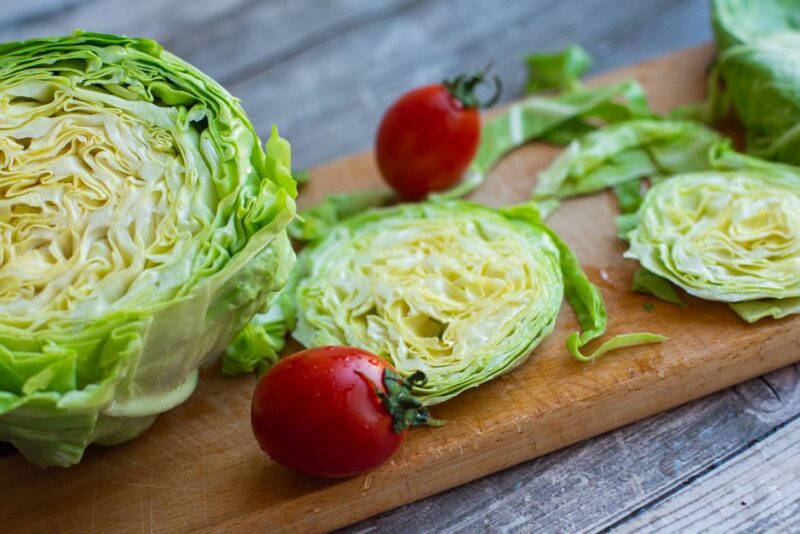
Cabbage is a case where the answer depends less on the vegetable than on its state —
and where one version gets frozen not for storage at all.
Fresh, blanched — up to 9 months
The long keeper. Blanching is not a formality here: without it, cabbage develops a strong
smell and a bitter edge within a month or two.
Shred, boil 1.5–2 minutes, straight into iced water, squeeze it out well —
cabbage holds a lot of water — and bag in portions.
Fresh, raw shredded — 2 to 3 months
Fine without blanching if you know it is going into soup or a braise before winter ends.
Over that horizon the enzymes do not have time to matter.
Sauerkraut — up to 8 months, no preparation
No blanching, no rinsing. Squeeze lightly, portion with a little of its brine,
and freeze. Flavour and acidity survive intact.
Useful when a jar is larger than your fridge.
Cooked or braised — up to 4 months
A finished dish freezes normally; the cabbage simply comes back softer.
Portion it and reheat covered.
A whole head — frozen instead of boiled
This is the odd one out. Put the whole head in the freezer for a day and then thaw it:
the leaves come away soft and pliable on their own, with no pot of boiling water
and no tearing.
It is the easiest way to prepare leaves for
holubtsi,
and the freezing is a technique rather than storage.
Raw, for coleslaw — no
Cabbage is close to half water; thawed leaves are limp and translucent, and the crunch
does not come back. Everything you freeze is destined for a hot dish.
What holds for all of them
Cook from frozen. Thawed cabbage releases a lot of water and collapses before it ever
reaches the heat.
Related:
Can you freeze broccoli and cauliflower ·
How long do cabbage rolls last in the fridge ·
How long does coleslaw last in the fridge ·
Why cabbage tastes bitter