Bread storage generates more confident wrong advice than almost anything else in a kitchen.
Taken one claim at a time.
“Keep bread in the fridge so it lasts longer”
The opposite. Staling is starch recrystallising, and that happens fastest at
around 4 °C — the fridge is close to the worst possible temperature for bread.
Counter for two days, freezer for anything longer, fridge never.
“Freezing ruins the texture”
It does not, because the freezer is cold enough to stop staling entirely rather than
accelerate it. Properly wrapped, bread keeps three months and revives close to fresh.
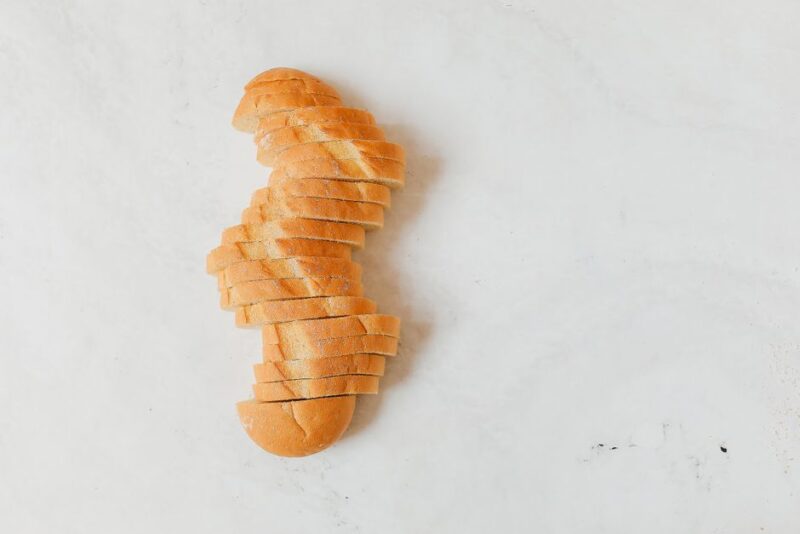
“Freeze the loaf whole so it does not dry out”
Slice it first. A frozen whole loaf has to be thawed entirely before you can get at it;
frozen slices come out one or two at a time and go straight into the toaster.
The only preparation that matters is cooling it completely before it goes in —
freezing warm bread creates ice crystals in the crumb.
“Thaw it in the microwave”
A few seconds is survivable; beyond that bread goes soft, then rubbery, then hard within
minutes. Thaw a whole loaf in its wrapper at room temperature and then refresh it in a
180 °C oven for 8–10 minutes. That step is what makes frozen bread taste
fresh rather than merely edible.
“A bread bin keeps it crusty”
Partly. Paper or a linen cloth keeps the crust crisp and lets the crumb dry;
plastic keeps the crumb soft and destroys the crust. You cannot have both,
so choose by which you care about.
Times, by type
| Type | Freezer |
|---|---|
| Sliced sandwich loaf | up to 3 months |
| Artisan or sourdough | up to 3 months |
| Rye | up to 3 months |
| Rolls and buns | up to 2 months |
| Unbaked dough | up to 1 month |
And the ends are not waste
Freeze offcuts in a bag as you go. Once there is enough they become breadcrumbs, croutons,
or the soaked bread that keeps
meatballs juicy.
Worth reading next:
Why bread is gummy inside ·
Why bread crust is soft ·
Can you freeze butter ·
What is pampushky